
Introduction
In the world of high-performance architecture, the curtainwall is the face of innovation. But behind that sleek glass skin lies a network of structural considerations, chief among them: anchorage. For structural engineers at Aquinas Engineering, designing wall anchors to resist wind loads is not a theoretical exercise—it’s a daily challenge, especially when dealing with complex façade geometries, edge conditions, and high-wind zones. This article explores real-world solutions Aquinas has implemented to anchor façade systems in demanding environments, translating wind pressure calculations into safe, efficient, and constructible designs.
Understanding the Challenge: Wind Pressures in Complex Zones
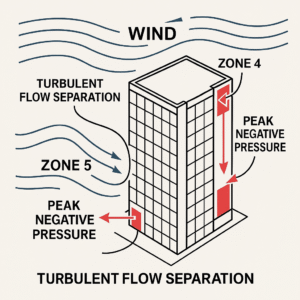
Wind pressures are rarely uniform. As ASCE 7-22 highlights, localized wind effects are amplified in building corners, parapets, and roof zones. Components and cladding zones (Zones 4 and 5 in particular) often see peak negative pressures due to turbulent flow separation. These forces can exceed 60 psf in coastal high-rise conditions. For façade anchorage design, this creates a dilemma: how to securely attach relatively delicate elements like glazing frames and metal panels without over-designing and increasing cost?
Case Study 1: Cantilevered Curtainwall at Tower Edge (Scottsdale, AZ)
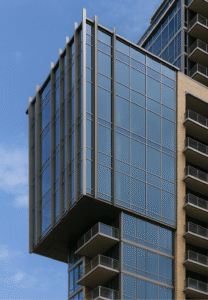
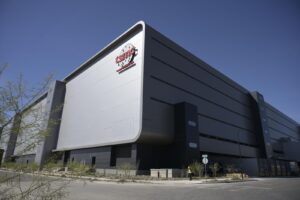
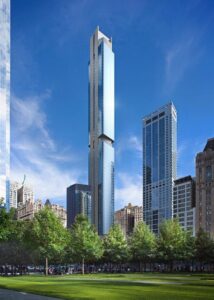
Cantilevered Curtainwall at Tower Edge in Scottsdale, AZ. Aquinas Engineering designed a custom knife-plate anchoring system to secure vertical fins and curtainwall panels under corner zone suction pressures exceeding 70 psf, ensuring stability and architectural alignment.
In a mixed-use tower project in Scottsdale, Aquinas Engineering designed a 36-story curtainwall system with cantilevered vertical fins. At the tower’s corner zones, wind tunnel data showed suction pressures exceeding 70 psf. Our solution? A custom knife-plate anchor system embedded into the slab edge, designed to transfer forces via tension rods back into the building’s structural core. This approach minimized deflection, ensured lateral stability, and allowed slab-edge alignment with architectural design intent.
Case Study 2: Re-Cladding a Hospital Under Operation (Houston, TX)
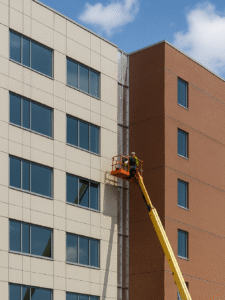
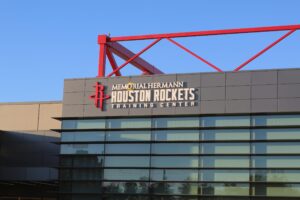
Re-Cladding a Hospital Under Operation in Houston, TX. Aquinas Engineering implemented a friction-based clip system anchored to structural steel using ICC-ES approved expansion anchors. The solution allowed for code-compliant wind resistance without penetrating existing waterproofing or disrupting ongoing hospital operations.
Re-cladding a live healthcare facility presents unique constraints: limited access, no penetrations into existing waterproofing, and continuous operation. For a Level I trauma center in Houston, Aquinas used a friction-based clip system anchored to the building’s structural steel. We used post-installed expansion anchors with verified ICC-ES approvals for high-wind tension loads and staged the installation to avoid impact on hospital operations. The result was a resilient façade system that met code wind loads without disturbing sensitive interior environments.
Practical Insights from the Field
- Preload and Embedment: Anchorage reliability is as much about installation as it is about design. We mandate torque checks and embedment depth inspections for all post-installed anchors.
- Edge Distance and Breakout Control: Concrete breakout remains a common failure mode. We employ software like Hilti PROFIS and Simpson Anchor Designer to simulate failure cones and optimize edge distances.
- Load Path Clarity: All anchors must have a clear and direct load path to the structural frame. Avoiding intermediate components with unknown capacities (e.g., backup studs) improves reliability.
- Mock-Up Testing: On complex systems, we advocate full-scale anchor testing before construction. Several Aquinas projects include in-situ load testing at 1.5x design wind pressure.
Conclusion
Designing for wind is more than calculating pressure coefficients—it requires creativity, coordination, and experience in field conditions. At Aquinas Engineering, we pride ourselves on engineering anchor solutions that blend safety, practicality, and elegance. Our real-world approach to façade anchorage ensures buildings not only stand tall but perform reliably against the forces of nature.
From Arizona to Florida and nearly everywhere in between, Aquinas Engineering holds licenses in 45 states across the U.S. Whether you’re designing a high-rise tower in a hurricane zone or recladding a legacy building under tight constraints, our team is ready to help. Contact Aquinas Engineering today to learn how our proven façade solutions can bring your next project to life—with strength, precision, and code compliance from the ground up.
About Aquinas Engineering Aquinas Engineering PLLC is a structural engineering firm specializing in building envelope systems. With projects across Arizona, Texas, and beyond, Aquinas provides expert structural solutions that meet architectural ambition and environmental demands.


Let us build a professional relationship. Tell us about your project today.
I really appreciated how quick and efficient the service was. It made our entire process much smoother. I’d just suggest continuing to maintain the quick turnaround, like getting the stamps within a day. It really helps us when we need them urgently, especially in situations where we might have missed the ball with our customers
Working with Aquinas has been nothing short of a pleasure. Not only are the response times great and consistent, Aquinas also provides strong and validating support above and beyond normal measures. I have zero criticisms. Aquinas Engineering has been an excellent asset to my team’s operation.
Quick fast service, great follow up. Aquinas approaches every project small and large with a high level of professionalism.