
Introduction
On July 17, 1981, a catastrophic structural failure occurred at the Hyatt Regency Hotel in Kansas City, Missouri, resulting in the deaths of 114 people and injuring over 200 others. This tragedy, one of the deadliest structural collapses in U.S. history, became a pivotal case study in engineering ethics, design accountability, and communication between project stakeholders. In this post, we’ll explore the technical and procedural causes of the collapse and the critical lessons it offers to engineers today.
Background of the Hyatt Regency Project
The Hyatt Regency was a modern luxury hotel featuring a grand atrium with suspended walkways connecting different floors. These walkways were a central architectural feature, designed to float above the lobby and provide dramatic visual appeal. However, beneath their elegance lay a fatal flaw in structural design and communication.
The Collapse Event
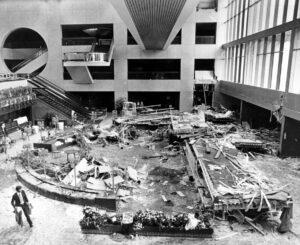
On the evening of July 17, 1981, during a popular tea dance event, two walkways suspended above the atrium suddenly collapsed. The fourth-floor walkway fell onto the second-floor walkway, which then crashed onto the crowded lobby below. The disaster claimed 114 lives and left over 200 injured. The nation was shocked, and the engineering community was forced to confront hard truths about design responsibility and oversight.
Structural Design of the Walkways
The original design called for a single set of steel rods to suspend both walkways from the atrium ceiling. However, during fabrication, the design was changed to a double-rod system—each walkway was supported independently. This change, though seemingly minor, doubled the load on the connection points of the fourth-floor walkway, which were not designed to bear that weight.
The revised design introduced a critical failure point: the box beam connections could not support the increased load, leading to a sudden and complete collapse.
Engineering Analysis of the Failure
Investigations revealed that the box beam connections failed under static load—not even dynamic or seismic forces. The change in design had not been properly reviewed or approved by the structural engineer of record. Moreover, communication between the design team and fabricators was fragmented, and the implications of the change were not fully understood or documented.
This failure was not just structural—it was procedural and ethical.

Investigation and Findings
A timeline of key events helps illustrate how the failure unfolded:
- 1978 – Original design submitted
- 1979 – Design change approved without full structural analysis
- 1980 – Construction completed
- July 17, 1981 – Collapse occurs
- July 18, 1981 – Investigation begins
- 1982 – ASCE releases its report
- 1985 – Legal consequences finalized
The ASCE and National Bureau of Standards concluded that the collapse was due to a flawed connection design and a lack of proper review. Several engineers lost their licenses, and the event led to significant changes in professional liability standards.
Key Lessons for Engineers
The Hyatt Regency collapse teaches us several vital lessons:
- Connection design matters: Small changes can have massive consequences.
- Peer review is essential: Every design must be checked by qualified professionals.
- Ethics and accountability: Engineers must speak up when safety is at risk.
- Communication is critical: All stakeholders must understand the implications of design changes.
Impact on Engineering Practice
The collapse led to reforms in building codes, engineering education, and professional ethics. It emphasized the need for:
- Clear documentation of design changes
- Mandatory peer review processes
- Stronger oversight during construction
- Ethical responsibility in engineering decisions
Today, the Hyatt Regency collapse is taught in engineering programs worldwide as a cautionary tale and a call to uphold the highest standards of practice.
Aquinas Engineering’s Commitment to Safety
At Aquinas Engineering, we take structural integrity and public safety seriously. Every project we undertake is guided by:
- Strict compliance with all applicable building codes and standards
- Internal peer review by licensed engineers before final approval
- Transparent collaboration between design, fabrication, and construction teams
- Ongoing professional development to stay ahead of industry best practices
We believe that engineering excellence is built on a foundation of diligence, ethics, and trust. The lessons of the past guide our commitment to a safer future.
Let’s build something extraordinary together.
📞 Contact us today: 210.237.7854
👉 Visit our website: https://aquinasengr.com/
📧 Email us at info@aquinasengineering.com
Photo Credit:
- https://www.alamy.com/an-unidentified-man-walks-through-the-scattered-wreckage-in-the-lobby-of-kansas-citys-hyatt-regency-hotel-on-sunday-july-19-1981-two-catwalks-spanning-the-lobby-crashed-onto-a-crowded-dance-floor-on-friday-night-killing-111-people-and-injuring-188-others-ap-photo-image526540279.html?irclickid=T8Y0yFxL-xycRXdzwg3iy28lUkpQRG3uIzpqUo0&utm_source=77643&utm_campaign=Royalty-free%20stock%20photos%20and%20images%20%E2%80%93%20Alamy%20&utm_medium=impact&irgwc=1&afsrc=1
- https://www.alamy.com/the-wreckage-of-two-catwalks-is-scattered-through-the-lobby-of-the-kansas-city-hyatt-regency-hotel-july-19-1981-after-a-collapse-on-friday-night-a-fourth-floor-walkway-fell-on-to-the-second-floor-walkway-then-both-crashed-onto-a-crowded-dance-floor-in-the-lobby-killing-over-100-people-and-injuring-many-more-ap-photopete-leabo-image526345653.html?irclickid=T8Y0yFxL-xycRXdzwg3iy28lUkpQRGy%3AIzpqUo0&utm_source=77643&utm_campaign=Royalty-free%20stock%20photos%20and%20images%20%E2%80%93%20Alamy%20&utm_medium=impact&irgwc=1&afsrc=1






Let us build a professional relationship. Tell us about your project today.
I really appreciated how quick and efficient the service was. It made our entire process much smoother. I’d just suggest continuing to maintain the quick turnaround, like getting the stamps within a day. It really helps us when we need them urgently, especially in situations where we might have missed the ball with our customers
Working with Aquinas has been nothing short of a pleasure. Not only are the response times great and consistent, Aquinas also provides strong and validating support above and beyond normal measures. I have zero criticisms. Aquinas Engineering has been an excellent asset to my team’s operation.
Quick fast service, great follow up. Aquinas approaches every project small and large with a high level of professionalism.