
Few buildings occupy the intersection of engineering performance and cultural visibility like One Times Square. Situated at the heart of New York City, the tower has served as a global icon for more than a century. Its ongoing transformation—modernizing systems, enhancing occupant experience, and upgrading performance—offers a timely case study for building‑envelope professionals. In this article, we focus on the skylight system engineered for One Times Square, sharing technical considerations, strategies, and lessons learned.
Aquinas Engineering’s Contribution to the Project
Aquinas Engineering served as the structural engineering partner responsible for the skylight system at One Times Square. Our client for this project was LINEL LLC, who engaged us to provide structural engineering support for a custom, high‑performance skylight assembly aligned with the project’s architectural intent and durability objectives.
Our role encompassed structural analysis of the skylight framing, including mullions, purlins, and perimeter members, along with the engineering of anchorages and load paths that would interface seamlessly with the building’s existing structure. We worked closely with LINEL to ensure that the skylight system would meet appropriate limits for deflection and drift, safeguarding glazing performance and waterproofing integrity. Coordination throughout design and fabrication was essential, particularly as system geometry, tolerances, and waterproofing interfaces required careful integration with the roofing and enclosure systems. Throughout the project, our priorities remained reliability, serviceability, and long‑term durability, recognizing that skylight success relies as much on movement control and detailing discipline as it does on strength.
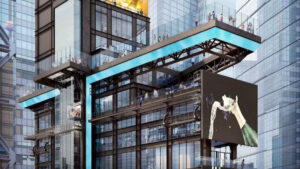
Cultural and Historical Significance of One Times Square
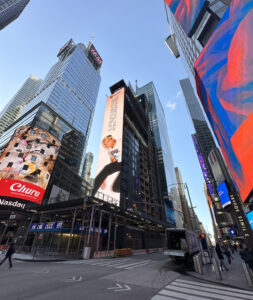
One Times Square, completed in the early twentieth century, became globally recognizable through its association with the New Year’s Eve ball drop tradition. As one of the most photographed and televised façades in the world, it carries a level of public exposure that places unique responsibilities on those who modify or upgrade it.
For engineers, this visibility elevates expectations for performance, longevity, and safety. Highly public buildings must operate reliably under dense urban foot traffic, continual exposure, and complex environmental conditions. The modernization of a culturally significant tower also demands sensitivity to identity: the building must evolve without losing the characteristics that define it in the public imagination. This leads to design decisions that prioritize preservation, minimize disruption, and extend service life, all while satisfying modern requirements for energy performance, resilience, and maintainability.
Architectural & Functional Overview of the Skylight System
The skylight designed for One Times Square serves as both a source of daylight and an architectural feature that enhances the clarity and openness of reprogrammed interior spaces. The design team sought a visually clean assembly with slender sightlines, which introduced structural challenges given the need to resist environmental loads, accommodate thermal expansion, and interface with roofing and waterproofing systems.
Functionally, the skylight operates as a true enclosure system. It must reliably transfer gravity and lateral loads, manage thermal movement across dissimilar materials, and maintain water, air, and condensation control. Achieving this balance required close collaboration between architectural vision and structural realities.
Structural Engineering Challenges
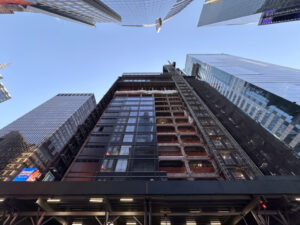
The structural engineering of the skylight system involved several technical constraints driven by the building’s urban location, geometry, and age. Environmental loading in Times Square is defined by turbulent wind patterns shaped by the surrounding high‑rise district. This creates localized pressure peaks that require careful definition of load cases and conservative combinations. Sloped glazing introduces additional considerations related to snow, rain, and drift loading, along with the possibility of unbalanced accumulation depending on roof geometry. Thermal gradients add yet another layer of complexity, as aluminum, steel, and glass respond differently to sun exposure and temperature change.
Integrating the skylight with a century‑old structure also posed challenges. Existing drawings were incomplete, and actual field conditions required verification through selective probes and survey methods. This ensured that the load paths we designed—carrying forces from skylight framing into primary building structure—were both safe and realistic. Accommodating irregularities in the historic structure required connections that could tolerate misalignment while maintaining performance.
Another significant challenge lay in balancing the architectural goal of slender, transparent sightlines with structural demands for stiffness and strength. Limiting deflections to protect glazing seals and waterproofing required careful selection of member sizes and orientations. Achieving the desired transparency meant strategically distributing stiffness, controlling spans, and integrating reinforcing strategies without compromising visual clarity.
Structural Design Approach
A 3D analytical model formed the backbone of the structural engineering approach. This model captured primary skylight members and included realistic boundary stiffness values at the points where the skylight connected to the building structure. Load cases included gravity, wind pressures derived from urban canyon effects, snow load combinations reflecting localized drift behavior, and thermal load cases representing differential movement between materials. Serviceability checks for deflection and rotation at glazing supports were central to ensuring long‑term watertightness and glazing performance.
Material selection played a key role in balancing structural and architectural requirements. Aluminum was chosen for the primary framing because of its favorable weight, corrosion resistance, and flexibility in fabrication. Steel was introduced strategically in areas requiring higher stiffness or stronger connections. Detailing addressed bimetallic corrosion mitigation, finish compatibility with surrounding systems, and thermal break integration to reduce condensation risks.
Anchorage design focused on clean load transfer and long‑term durability. Each anchor point was evaluated for embedment adequacy, edge distances, and compatibility with historic substrates. Redundancy and ductility were incorporated to handle localized irregularities. Waterproofing continuity at every penetration demanded close coordination with roofing trades, ensuring that sleeves, washers, sealants, and flashing formed a unified and resilient system.
Performance Outcomes
The resulting skylight system is expected to provide strong performance across structural, environmental, and durability metrics. Its framing and connections are designed to withstand governing load combinations with conservative safety margins. Serviceability criteria ensure that glazing components remain properly seated and sealed over time. The waterproofing strategy uses redundancy and managed drainage to protect the interior against infiltration. Thermal breaks and insulation continuity support resistance to condensation, while the system’s detailing promotes long‑term maintainability through accessible components and replaceable gaskets.
Lessons Learned & Industry Takeaways
Several key insights emerged from the engineering of this skylight system. Early integration between structural, waterproofing, and fabrication disciplines proved essential for avoiding geometry traps and complex sealing conditions later in the process. Designing for tolerance, rather than perfection, was particularly important given the challenges of retrofitting into historic structure. The project reinforced the principle that serviceability—especially deflection control—is as critical as ultimate strength when working with glazing and enclosure systems. Thermal movement must be treated as a governing design load, not an afterthought. Mockups repeatedly demonstrated their value by illuminating drainage patterns and constructability concerns before installation. Finally, the cultural prominence of One Times Square underscored the need for redundancy, accessibility, and long‑term maintainability in all design decisions.
Conclusion
The One Times Square skylight demonstrates how engineering vision and architectural clarity can merge to modernize a culturally significant building. By focusing on load path transparency, deflection control, waterproofing continuity, and constructability, the design advances practical knowledge applicable to skylight systems in dense urban environments. Aquinas Engineering is proud to have supported this effort in partnership with LINEL LLC. We remain committed to sharing thoughtful, technical insights that support the building‑envelope community and the continued evolution of high‑performance façade systems.
Let’s build something extraordinary together.
📞 Contact us today: 210.237.7854
👉 Visit our website: https://aquinasengr.com/
📧 Email us at info@aquinasengineering.com
Photo Source:
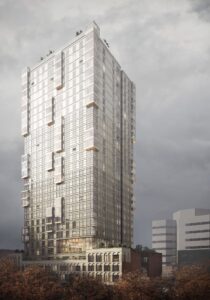
- Michael Young. Rendering courtesy of Jamestown. https://newyorkyimby.com/2024/01/one-times-squares-new-facade-begins-installation-in-times-square-manhattan.html.

Let us build a professional relationship. Tell us about your project today.
I really appreciated how quick and efficient the service was. It made our entire process much smoother. I’d just suggest continuing to maintain the quick turnaround, like getting the stamps within a day. It really helps us when we need them urgently, especially in situations where we might have missed the ball with our customers
Working with Aquinas has been nothing short of a pleasure. Not only are the response times great and consistent, Aquinas also provides strong and validating support above and beyond normal measures. I have zero criticisms. Aquinas Engineering has been an excellent asset to my team’s operation.
Quick fast service, great follow up. Aquinas approaches every project small and large with a high level of professionalism.