
Introduction: A Building Type Defining the Digital Age
Data centers have become a fundamental component of modern infrastructure, supporting cloud computing, artificial intelligence, financial systems, government services, and global communications. While often architecturally understated, these facilities impose some of the most demanding structural performance criteria among contemporary building typologies. Their rapid expansion across the United States has elevated data center design from a specialized niche to a core focus within structural engineering practice.
Drawing from direct project experience, Aquinas Engineering has performed structural calculations for more than 60 data center facilities nationwide, encompassing a broad range of envelope and façade support systems. This work spans diverse seismic zones, wind regions, and climatic conditions and includes both new construction and adaptive reuse projects. Exposure to these varied conditions provides valuable insight into the structural behaviors, detailing challenges, and coordination requirements that consistently arise within mission‑critical facilities.
Market Drivers and Implications for Structural Design
The accelerated development of data centers is driven by sustained growth in cloud‑based services, increasing computational density, and the proliferation of hyperscale and colocation facilities. Unlike traditional commercial developments, many data centers are driven by end‑user performance metrics such as uptime, scalability, and reliability rather than occupant experience. These priorities directly influence how buildings are designed, constructed, and maintained.
From a structural engineering perspective, this market dynamic introduces compressed schedules, evolving equipment requirements, and frequent late‑stage changes to loading assumptions or spatial layouts. Structural systems must therefore be robust enough to absorb design evolution while remaining adaptable, clearly documented, and constructible under aggressive delivery timelines.
Data Centers as a Distinct Structural Typology
Data centers represent a structurally distinct building class characterized by high load intensities, low occupant loads, and stringent serviceability requirements. Architectural layouts are typically dictated by equipment zoning, cooling strategies, and power distribution rather than traditional programming, placing the structure in direct service to operational efficiency.
Large, uninterrupted floor plates are often required to maximize flexibility, while redundancy expectations frequently exceed those associated with conventional commercial buildings. Settlement tolerances, deflection limits, and vibration criteria are typically more restrictive, and facilities are often designed with long operational lifespans during which interior demands may change significantly. These factors require structural engineers to reassess assumptions that might otherwise apply to office or industrial structures.
Gravity Load Regimes and Equipment‑Driven Design
Gravity loading is one of the dominant drivers of structural design in data centers. Floor live loads are routinely higher than standard code minimums to accommodate dense server racks, power distribution units, battery storage systems, and associated infrastructure. In many cases, concentrated loads from specialized equipment govern framing layouts more than uniform area loads.
Roof structures are similarly impacted by mechanical systems, cooling equipment, and modular rooftop units. Structural framing must be carefully developed to address both current loading requirements and anticipated future increases in equipment density. This often necessitates conservative yet efficient load‑path strategies, localized strengthening, and early coordination with equipment vendors and MEP designers.
Serviceability and Vibration Performance
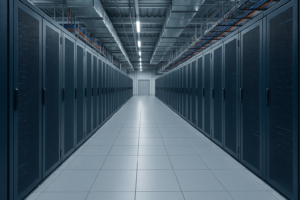
Beyond strength and stability, serviceability frequently controls structural design decisions in data centers. Excessive deflection or floor vibration can adversely affect equipment performance, particularly for sensitive computing or storage systems. Allowable deflections may be governed by operational criteria rather than occupant comfort, leading to tighter limits than those typical in commercial construction.
Floor systems must be evaluated for both short‑ and long‑term deflection behavior, as well as dynamic response characteristics. These considerations influence span lengths, member depths, material selection, and overall structural system configuration. Early evaluation of serviceability performance is critical, particularly when coordinating with raised floor systems or slab‑on‑grade solutions.
Resilience, Robustness, and Structural Redundancy
Continuous operation is a defining requirement for data centers, and structural performance plays a critical role in achieving this objective. While compliance with applicable building codes is a baseline requirement, many data center projects demand enhanced performance relative to wind, seismic, and accidental load scenarios.
Structural redundancy and robustness are often emphasized to ensure that localized damage does not propagate or result in operational shutdown. Engineers must consider not only global stability but also load redistribution, continuity, and system behavior under atypical or extreme conditions. In this context, the structure functions as part of an overall risk‑mitigation strategy rather than merely a gravity and lateral load‑resisting system.
Structural Interaction with Building Envelope Systems
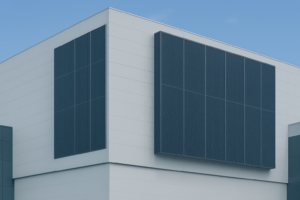
The building envelope is integral to data center performance, serving as the primary barrier against thermal, moisture, and environmental intrusion. Envelope systems are often heavy and highly specialized, incorporating precast panels, composite assemblies, extensive louvers, and large penetrations to support cooling and ventilation strategies.
These systems introduce significant structural demands and require careful detailing to accommodate differential movement, thermal expansion, and construction tolerances. Air‑tightness and moisture‑control requirements further heighten the importance of precise interface coordination. Data center projects consistently highlight the need for close collaboration between structural engineers and building envelope specialists to ensure performance is achieved without compromising constructability or long‑term durability.
Constructability and Accelerated Delivery
Speed to market is frequently a primary driver in data center development. To meet schedule demands, many projects rely on design‑build delivery models, prefabrication, and modular construction strategies. Structural systems must be compatible with these approaches, favoring repetition, clarity, and efficient erection sequencing.
Early release of structural packages and engagement with fabricators and contractors are common aspects of the delivery process. Clear load delineation, simplified connection details, and well‑coordinated drawings are essential to maintaining schedule certainty while preserving structural intent and performance.
Sustainability, Adaptability, and Long‑Term Performance
As attention to energy consumption and environmental impact grows, sustainability has become an increasingly important consideration in data center projects. Structural engineers contribute through approaches such as adaptive reuse of existing buildings, thoughtful material selection to reduce embodied carbon, and the design of durable systems with extended service lives.
Adaptability is equally critical. Because computing technology evolves rapidly, structures that can accommodate future equipment upgrades or changes in cooling strategies without significant modification provide long‑term operational and environmental value. Designing for flexibility helps ensure that facilities remain viable over decades of service.
Implications for Structural Engineering Practice
The data center boom presents a growing body of work that is technically demanding and highly specialized. Success in this sector requires more than conventional structural design skills; it demands foresight, coordination, and a detailed understanding of how structural decisions influence operational performance and risk.
For structural engineers, data centers represent an opportunity to apply rigorous engineering principles in a context where performance, reliability, and resilience are paramount. Early involvement and close collaboration with envelope, mechanical, and construction teams are essential to delivering successful projects.
Conclusion: Engineering Infrastructure for Continuous Performance
Though largely invisible to the public, data centers are among the most structurally demanding facilities constructed today. They require systems designed for resilience, adaptability, and uninterrupted operation under a wide range of conditions. As the digital economy continues to expand, the role of structural engineers in shaping these facilities will only grow in importance.
By understanding data centers as a distinct and evolving structural typology, the engineering community can continue to refine best practices, strengthen coordination with building envelope systems, and contribute meaningfully to the physical infrastructure that supports modern life.
Let’s build something extraordinary together.
📞 Contact us today: 210.237.7854
👉 Visit our website: https://aquinasengr.com/
📧 Email us at info@aquinasengineering.com



Let us build a professional relationship. Tell us about your project today.
I really appreciated how quick and efficient the service was. It made our entire process much smoother. I’d just suggest continuing to maintain the quick turnaround, like getting the stamps within a day. It really helps us when we need them urgently, especially in situations where we might have missed the ball with our customers
Working with Aquinas has been nothing short of a pleasure. Not only are the response times great and consistent, Aquinas also provides strong and validating support above and beyond normal measures. I have zero criticisms. Aquinas Engineering has been an excellent asset to my team’s operation.
Quick fast service, great follow up. Aquinas approaches every project small and large with a high level of professionalism.