
Introduction
As building performance expectations continue to evolve, the building envelope has become one of the most important systems in modern construction. No longer viewed simply as a barrier between interior and exterior environments, today’s envelopes are expected to support energy efficiency goals, manage moisture, maintain occupant comfort, and withstand increasingly demanding environmental conditions. These expectations have encouraged designers to seek enclosure systems that can satisfy multiple performance objectives simultaneously.
Insulated metal panels (IMPs) have emerged as a popular solution in response to these demands. By combining exterior cladding, thermal insulation, and an interior liner into a single prefabricated assembly, IMPs offer a streamlined alternative to traditional multi-component wall systems. Once associated primarily with industrial facilities and cold-storage buildings, they are now commonly specified for commercial, institutional, healthcare, and mixed-use projects.
While insulated metal panels are often recognized for their thermal performance, evaluating their effectiveness requires a more comprehensive perspective. Structural behavior, moisture management, air barrier continuity, durability, constructability, and long-term maintenance can all influence the success of the system. A thorough evaluation requires understanding how the panels function within the larger building envelope and how their performance affects the building as a whole.
Understanding Insulated Metal Panel Systems
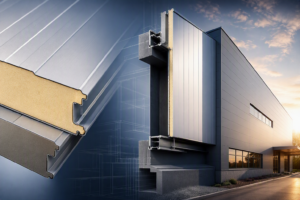
Insulated metal panels are composite assemblies consisting of two metal facings bonded to a rigid insulating core. The bonding of these components creates a lightweight panel capable of providing weather protection, thermal insulation, and architectural finish in a single product. Depending on the project requirements, panel cores may be manufactured from materials such as polyisocyanurate, polyurethane, or mineral wool, each offering unique characteristics related to thermal efficiency, fire resistance, and overall performance.
One of the primary benefits of IMP systems is their ability to simplify the enclosure assembly. Traditional wall systems often require multiple layers installed by different trades, including framing, insulation, air barriers, weather barriers, and exterior cladding. In contrast, insulated metal panels consolidate many of these functions into a prefabricated product manufactured under controlled conditions. This approach can improve quality, reduce installation time, and minimize coordination challenges during construction.
However, despite their apparent simplicity, IMP systems remain sophisticated building envelope components. Their performance depends not only on the panel itself but also on the quality of the supporting structure, connection details, interface conditions, and installation practices. As with any enclosure system, successful implementation requires careful evaluation during design and execution.
Key Performance Criteria
When evaluating insulated metal panel systems, it is important to consider multiple performance categories rather than focusing on a single metric. Thermal efficiency may be one of the primary drivers behind their selection, but long-term success depends on the ability of the system to address a broad range of building envelope demands.
Thermal performance is often the starting point. The continuous insulation provided by the foam core allows IMPs to achieve high levels of thermal efficiency while reducing many of the thermal bridges commonly found in conventional stud wall construction. This characteristic can contribute to reduced energy consumption and improved occupant comfort. However, actual building performance depends on more than the insulation contained within the panel. Joint design, support attachment methods, penetrations, and transitions to adjacent systems can all influence thermal continuity and should be examined as part of a whole-envelope evaluation.
Air barrier performance is equally important. Uncontrolled air leakage can significantly affect energy efficiency and indoor environmental conditions. The performance of panel joints, seals, and transitions often determines whether the enclosure will maintain the intended level of airtightness. Even assemblies with excellent insulation values can experience performance shortfalls if air leakage paths are not effectively controlled.
Water resistance represents another critical performance category. All building envelopes must resist the intrusion of bulk water while safely managing any moisture that may penetrate the exterior surface. While insulated metal panels themselves are generally durable and weather resistant, challenges often occur at horizontal and vertical joints, around penetrations, and at transitions between different enclosure systems. Evaluating these details thoroughly is essential for ensuring long-term performance.
Additional considerations include fire performance and acoustic characteristics. Depending on the building occupancy and project requirements, panel core materials, fire ratings, and sound attenuation properties may play an important role in system selection. These factors should be evaluated alongside thermal and structural requirements to ensure the chosen assembly meets the project’s overall objectives.
Structural Evaluation of IMP Systems
Although insulated metal panels are frequently discussed from an energy-performance perspective, their structural behavior is equally important. As exterior enclosure components, they must safely resist environmental loads throughout the life of the building while maintaining acceptable serviceability performance.
Wind loading is often the governing structural design consideration. Exterior wall systems must resist positive and negative pressures generated by wind events, and these loads can become significant in tall buildings, open exposure conditions, coastal regions, and hurricane-prone areas. Engineers should evaluate panel capacities based on project-specific loading conditions rather than relying solely on generic manufacturer data. Span capabilities, support spacing, and connection design must all be verified to ensure adequate resistance.
The composite action between the metal facings and insulating core provides the stiffness that allows IMPs to span between supports. While manufacturers provide tested performance data and span tables, engineers should review these values within the context of the project’s loading requirements and serviceability criteria. What may be structurally adequate from a strength perspective may not necessarily satisfy project-specific deflection limitations or aesthetic expectations.
Connection design deserves particular attention during evaluation. In many applications, the performance of the attachment system ultimately determines how well the envelope performs under load. Fasteners, clips, and anchorage components must safely transfer forces to the supporting structure while accommodating differential movement caused by thermal expansion and contraction. Improperly detailed connections can lead to excessive movement, localized distress, water infiltration, and reduced long-term performance.
Serviceability considerations should also be carefully reviewed. Excessive panel deflections, thermal movements, or visible surface distortions such as oil canning may not represent structural failures, but they can affect the functionality and appearance of the building. Because insulated metal panels often serve as exposed architectural elements, maintaining acceptable serviceability performance is frequently just as important as meeting strength requirements.
Moisture and Durability Assessment
Long-term building envelope performance depends heavily on moisture management and material durability. While insulated metal panels are generally regarded as durable systems, their performance can still be compromised if environmental conditions are not properly considered.
Condensation control is one of the most important aspects of moisture management. Temperature differences between interior and exterior environments can create conditions that allow moisture to accumulate within enclosure assemblies. Although the continuous insulation provided by IMPs can reduce condensation potential compared to many conventional wall systems, careful attention should still be given to climate conditions, vapor control strategies, and transition details. Effective condensation management not only preserves thermal performance but also helps prevent corrosion and other forms of material deterioration.
Durability considerations extend beyond moisture control. Environmental exposure, UV radiation, airborne contaminants, and corrosive conditions can all affect the long-term performance of metal components and protective coatings. Material selection should reflect the anticipated exposure conditions throughout the expected service life of the building. Projects located in coastal or industrial environments may require additional consideration to ensure adequate resistance to corrosion and environmental degradation.
It is also important to recognize that no building envelope system is entirely maintenance free. Sealants age, joints experience movement, and exposed surfaces require periodic inspection. Owners who understand the maintenance requirements of their enclosure systems are generally better positioned to preserve performance over decades of operation. For this reason, lifecycle considerations should form part of any comprehensive evaluation.
Evaluating Constructability and Integration
Many enclosure performance issues cannot be attributed to the primary wall system itself. Instead, they occur at locations where different building systems intersect. As a result, constructability and integration should be considered key components of any IMP evaluation.
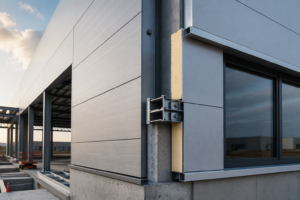
Insulated metal panels rarely function in isolation. They must integrate with windows, curtain walls, louvers, roofing assemblies, mechanical penetrations, and structural supports. Each interface presents opportunities for discontinuities in thermal performance, air barrier continuity, and water management. The effectiveness of these transitions often has a greater influence on overall enclosure performance than the panel system itself.
Certain details consistently require additional attention during design and construction. Corners, roof-to-wall transitions, expansion joints, window perimeters, and penetrations are among the most common locations where performance issues originate. Successful projects are typically characterized by clear detailing, coordinated design documents, and an understanding of how individual systems work together as part of the entire enclosure assembly.
Early collaboration among architects, structural engineers, enclosure consultants, and specialty contractors can significantly improve project outcomes. Coordinated design reviews help identify potential conflicts before construction begins and provide opportunities to refine details that may otherwise become sources of future performance problems.
Comparing IMPs to Alternative Systems
Like any building envelope solution, insulated metal panels offer advantages and limitations that should be assessed in relation to project goals. Their suitability often depends on how they compare with alternative systems available to the design team.
Compared with traditional insulated stud wall construction, IMPs can offer faster installation, reduced field labor, and improved thermal continuity. The consolidation of multiple enclosure functions into a single product can simplify construction and reduce opportunities for installation errors. However, conventional wall systems may provide greater flexibility for architectural modifications and future renovations.
Compared with precast concrete panels, insulated metal panels are typically lighter and impose lower demands on the supporting structure. Their relatively high thermal efficiency can also provide advantages from an energy-performance perspective. Precast systems, however, may be preferred when durability, mass, architectural expression, or impact resistance are primary design drivers.
Curtain wall systems offer a different set of benefits and challenges. While they provide architectural transparency and design flexibility, they often require more careful attention to thermal performance and maintenance. In many applications, insulated metal panels can achieve higher levels of energy efficiency while offering a durable and economical enclosure solution.
Ultimately, no single system is appropriate for every project. The most effective approach involves evaluating performance objectives, constructability, durability expectations, aesthetics, and budget constraints collectively. When viewed through this broader lens, insulated metal panels can be understood as one of several viable options within the designer’s toolkit.
Engineering Lessons from Field Performance
Experience from completed projects consistently demonstrates that successful building envelope performance depends on more than product selection alone. While quality materials are essential, detailing, coordination, and installation practices often exert an equal or greater influence on long-term results.
Projects that perform well frequently share several common characteristics. They involve early interdisciplinary collaboration, prioritize enclosure continuity, and incorporate thorough quality-control procedures throughout design and construction. Design teams that evaluate interfaces carefully and resolve transition details before construction generally experience fewer performance issues once the building is occupied.
Conversely, many enclosure problems originate at locations where different systems converge. Roof-to-wall transitions, window interfaces, expansion joints, and mechanical penetrations remain among the most common sources of air leakage, water infiltration, and thermal discontinuities. These issues often arise not because of deficiencies in the panel system itself, but because the surrounding conditions were not adequately addressed.
Perhaps the most important lesson is that building envelopes should be evaluated as integrated systems. Energy performance, moisture control, structural behavior, and constructability are all interconnected. Decisions made to improve one aspect of performance can influence others, making a holistic approach essential. Engineers who recognize these relationships are often better equipped to deliver durable, resilient, and high-performing enclosure solutions.
Future Trends in IMP Technology
The building enclosure industry continues to evolve in response to changing regulations, sustainability objectives, and owner expectations. Insulated metal panel technology is advancing alongside these broader trends.
Increasingly stringent energy codes are driving demand for higher-performing envelope assemblies capable of reducing operational energy consumption. As a result, manufacturers continue to develop products that offer improved thermal performance and enhanced detailing at panel joints and system interfaces.
Sustainability considerations are also becoming increasingly influential. Beyond operational energy savings, project teams are paying closer attention to material efficiency, embodied carbon, and overall lifecycle impacts. These factors are expected to play a growing role in future enclosure evaluations and specification decisions.
At the same time, the industry is moving toward more performance-based approaches to design. Rather than evaluating products solely on isolated material properties, project teams are increasingly focused on measurable building outcomes, including energy use, durability, resilience, and occupant comfort. This shift is likely to encourage more comprehensive evaluation methods and greater collaboration among disciplines involved in building enclosure design.
Conclusion
Insulated metal panels have become an important component of contemporary building envelope design by combining insulation, weather protection, and architectural finish into a single integrated assembly. Their popularity reflects the industry’s ongoing pursuit of enclosure systems that deliver both performance and constructability benefits.
However, evaluating insulated metal panel systems requires more than reviewing published insulation values or manufacturer literature. Thermal performance, structural behavior, moisture management, durability, constructability, and long-term maintenance all contribute to the success of a project. The most effective evaluations consider not only the panel itself but also the connections, transitions, and supporting systems that influence overall building performance.
As the demands placed on building envelopes continue to increase, engineers have an important role to play in assessing these systems holistically. By approaching insulated metal panels as part of a complete enclosure strategy rather than as standalone products, design teams can make more informed decisions and help deliver buildings that perform reliably throughout their service life.
Let’s build something extraordinary together.
📞 Contact us today: 210.237.7854
👉 Visit our website: https://aquinasengr.com/
📧 Email us at info@aquinasengineering.com



Let us build a professional relationship. Tell us about your project today.
I really appreciated how quick and efficient the service was. It made our entire process much smoother. I’d just suggest continuing to maintain the quick turnaround, like getting the stamps within a day. It really helps us when we need them urgently, especially in situations where we might have missed the ball with our customers
Working with Aquinas has been nothing short of a pleasure. Not only are the response times great and consistent, Aquinas also provides strong and validating support above and beyond normal measures. I have zero criticisms. Aquinas Engineering has been an excellent asset to my team’s operation.
Quick fast service, great follow up. Aquinas approaches every project small and large with a high level of professionalism.